

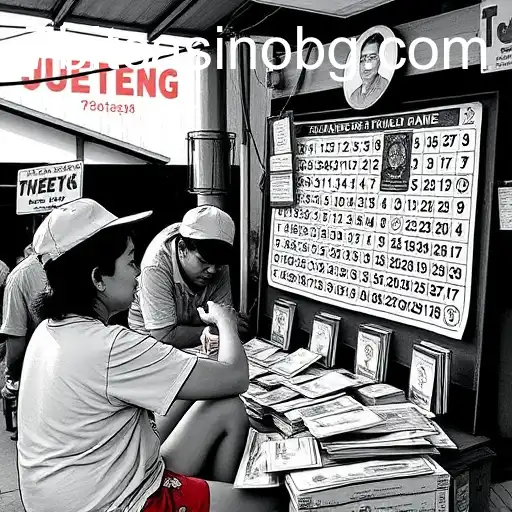
Understanding Jueteng: An Overview
Jueteng is an illegal numbers game widely played in the Philippines. It originated during the Spanish colonial period and has persisted through decades, becoming deeply embedded in Filipino culture. Despite numerous efforts to eradicate it, Jueteng remains a significant socio-economic issue, characterized by its simplicity and the complex web of corruption, politics, and poverty it is entwined with.
The Mechanics of Jueteng
The game operates on a simple premise: players select a combination of numbers, typically ranging from 1 to 37. These numbers are then drawn twice a day, and winners receive a pre-determined payout based on the amount they wagered. The minimal investment required to participate makes it appealing to the masses, particularly among the financially disadvantaged, who are enticed by the hope of winning significant cash prizes compared to their usual earnings.
Historical Context and Cultural Significance
Historically, Jueteng has thrived in rural and urban areas where economic opportunities are scarce. Its endurance can be attributed to its role as a traditional activity offering both entertainment and economic relief. The game's cultural significance cannot be underestimated; in many communities, it is as much a social event as it is a gambling activity, often involving generations of players who view it as part of their familial and local traditions.
Socio-Economic Implications of Jueteng
The presence of Jueteng highlights the persistent economic disparities in the Philippines. It is generally prevalent in areas with high poverty rates and limited access to legitimate income sources. While it provides short-term financial aid to winners and job opportunities to those involved in its operations, such as kubradors (collectors) and cabos (supervisors), it also perpetuates a cycle of poverty and dependency.
Economic Benefits and Drawbacks
From an economic standpoint, Jueteng offers a semblance of income opportunity. For the kubradors, who collect bets, and the cabos, who manage operations, it provides a daily wage unmatched by typical local employment. However, the personal and social costs are considerable, including entrenching reliance on illegal sources of livelihood and fostering environments where criminal activity goes unchecked due to high-level corruption.
Political Connections and Corruption
Jueteng's entanglement with politics and corruption is well-documented. Its proceeds often fund local political campaigns, while officials ignore or protect operations in exchange for bribes. This cyclical relationship undermines efforts to enforce laws and promotes a governance system where illegal activities are tolerated, if not outright encouraged.
Attempts at Regulation and Control
Efforts to regulate Jueteng have traditionally been met with difficulty. Despite periodic government crackdowns and public awareness campaigns, the game continues to flourish, partly due to corruption within law enforcement and government agencies. These challenges have prompted some to argue for the legalization of Jueteng, suggesting that regulation could mitigate its social harms while also generating revenue for the state.
The Role of Law Enforcement and Governance
Inconsistent enforcement of anti-gambling laws showcases the complexities surrounding Jueteng. Law enforcement agencies often face resistance due to the game's deep-rooted social acceptance and the protection offered by corrupt officials. Reform initiatives call for a more transparent and accountable system that could gradually dismantle the infrastructure supporting Jueteng.
Community and Societal Perspectives
Community attitudes toward Jueteng are often ambivalent. Many participants view it as a necessary evil, a means to an end for survival in a socio-economic landscape that offers few alternatives. Efforts to address the problem must therefore consider the broader socio-economic framework, aiming to provide viable alternatives for income and recreation.
The Future of Jueteng in the Philippines
Jueteng’s persistence poses questions about future policy directions. The debate on whether to legalize and regulate versus continuing stringent prohibition remains contentious. The decision requires a nuanced understanding of its socio-economic role and potential pathways for reform that address both the supply and demand aspects of the game.
Addressing the Jueteng issue effectively involves tackling broader societal challenges, such as poverty alleviation, political reform, and building public trust in governance. A multifaceted approach that considers these elements may be more successful in curtailing the illegal numbers game's grip on numerous Filipino communities.